Roasted chestnut cart in Lisbon

The streets of Lisbon are alive with commerce, much of it tourist-oriented. This man is one of the many hawking roasted chestnuts.
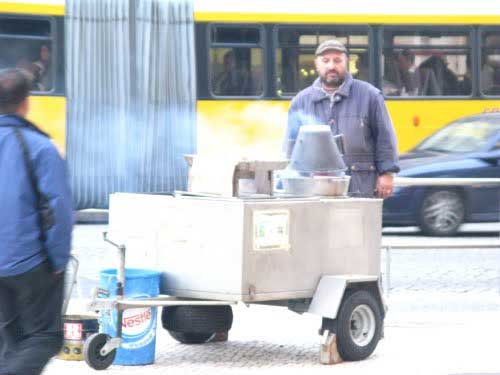
At two Euros per bag, they can't be called cheap (very little in Portugal can, in fact). However, once you have cracked open one of the pleasantly warm nuts and put it in your mouth, any misgivings you had take leave.

The savory, almost smoky, flavor of roasted chestnuts is delightful, inspiring a multitude of memories, and with a friendly smile from the hawker, you are on your way with your bulging paper bag.
November is the month when chestnuts begin to appear in Lisbon. It is traditional to eat chestnuts and drink new wine on St. Martins Day, or Dia de São Martinho (November 11) in Portugal.

Before the Age of Discoveries introduced potatoes, rice, and pasta, chestnuts were a key food source in Portugal. Packed with vitamins, minerals, and carbs, they’re low in fat and help cleanse the blood of acids created by consuming red meat, which is plentiful in traditional Portuguese cuisine.
St Martin's Day
Dia de São Martinho (St. Martin's Day) in Portugal is celebrated on November 11th and marks the feast of Saint Martin of Tours, known for his act of kindness in sharing his cloak with a beggar. Traditionally, it's a time to enjoy the newly produced wine (known as água-pé or vinho novo) and roasted chestnuts during gatherings called magustos. The day also coincides with the so-called "Verão de São Martinho" (St. Martin's Summer) - a brief spell of warm weather that often occurs around this time. Across Portugal, families and communities come together for outdoor fires, music, and simple rustic foods, celebrating generosity, harvest, and the change of seasons.
É dia de São Martinho; comem-se castanhas, prova-se o vinho.
© Portugal Visitor


No comments:
Post a Comment